Column · @basementpulloutservicedigest
When Your Car Gets Trapped: Why a Basement Pullout Service Matters
Getting a vehicle stuck in a basement carpark is one of those situations that feels almost absurd until it happens to you. You reverse too close to a low ceiling, misjudge a ramp, or the car simply refuses to start in a tight underground space. Suddenly, you are staring at a concrete pillar and a growing crowd of annoyed commuters. That is when a proper basement pullout service becomes worth its weight in gold.
I have been in the recovery business long enough to know that above-ground tows are straightforward. You hook up, winch the vehicle onto a flatbed, and drive off. But basement recoveries are a different animal. The height restrictions alone can rule out most standard tow trucks. A conventional truck with an elevated bed simply cannot fit under a 2.1-metre clearance. This is where a specialist basement pullout service proves its value. It uses a low-profile hydraulic lift system that slides under a stranded vehicle without requiring vertical space. The operator raises the car just enough to clear the ground and rolls it out to the ramp. It is precise, it is careful, and it saves you from having to dismantle the car or the building.
I recall a call on Sheikh Zayed Road where a delivery driver had wedged his van under a low mezzanine level. The van was physically stuck, with the roof pressing against a steel beam. A regular tow truck would have caused structural damage or broken the van's roof. We brought in a basement pullout service unit with a low-profile hydraulic lift system. The operator slid the lift under the van, raised it a few centimetres, and gently pulled it free. The entire job took about forty-five minutes. The driver was back on the road before his shift ended. That kind of efficiency is not just convenient, it is essential for businesses that rely on their vehicles to keep moving.
What Makes a Basement Pullout Different
Standard emergency roadside assistance usually involves a tow truck that can handle a broken-down car on an open road. But when the car is in a basement, you need equipment that can operate in tight spaces. A typical flatbed tow truck might be too tall to enter the carpark. Even if it can squeeze in, the angle of the ramp could scrape the underside of the vehicle. A basement pullout service uses a specialised low-profile trailer or a hydraulic lift system that can slide under the car without needing the driver to steer or push.

The process is fairly simple but requires experience. The technician positions the lift under the stuck vehicle, activates the hydraulic system, and raises the car just enough to clear the ground. Then the car is wheeled out on the lift's own wheels, often to a waiting flatbed tow truck outside the building. This method avoids any contact with the ceiling or walls. It also prevents damage to the vehicle's underside, which is a real risk when you try to drag a car out with a winch alone.
When You Might Need This Service
Basement pullout service is not only for cars that are physically stuck under a low ceiling. It covers a range of situations where the vehicle is inaccessible for a standard tow:
- The car's battery is dead and the parking spot is too tight for a battery jump-start with cables. A Duracell jump starter might help if you can reach the battery, but sometimes the car is wedged in a corner. The pullout service gets the car into the open where a jump-start or fuel delivery service can be performed safely.
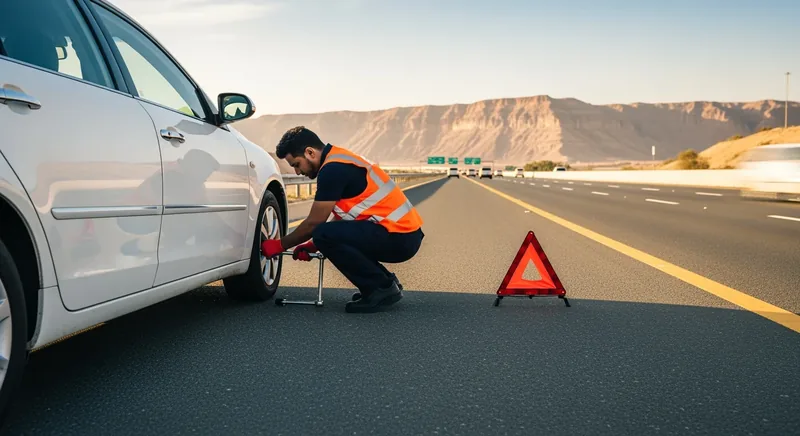
- The vehicle has a tire blowout inside the carpark. Changing a tyre in a basement is dangerous because of low light and limited space. The recovery team can pull the car out to a safer area where an on-site mechanic can handle the repair.
- The car's keys are locked inside and it is parked in a tight spot. Lockout assistance can be tricky when the car is against a wall. The pullout service moves the vehicle far enough to allow the technician to work the locks.
- A heavy vehicle like a delivery truck gets stuck in a residential basement. Heavy vehicle recovery in a confined space demands the right gear and a careful approach. The hydraulic lift system can handle the weight without destabilising the truck.
Common Problem Areas in Dubai
In Dubai, basement carpark issues happen most often around Al Quoz industrial area, where older buildings have low clearance and narrow ramps. We also get calls from residential towers near Jebel Ali port, where the basement levels were designed for smaller cars but now host larger SUVs and vans. Sheikh Zayed Road itself has several commercial buildings with tricky entrances that catch drivers off guard. The Dubai police and RTA Dubai are usually the first to respond to a blockage that affects traffic flow. They will call a recovery service to clear the vehicle quickly. A fast, professional basement pullout service can prevent a minor delay from turning into a major traffic snarl.
Another scenario is when a vehicle is stuck in sand near a construction site or a desert road. While that is not a basement situation, the same low-profile equipment can be used for a vehicle stuck in sand if the ground is firm enough. Winch recovery from a soft patch is more typical for sand, but the hydraulic lift can help if the vehicle is partially buried. The key is to have a team that can assess the situation and choose the right tool.

Choosing the Right Recovery Provider
Not all towing companies offer a dedicated basement pullout service. Many just bring a standard tow truck and hope it fits. If it does not, they end up calling a specialist, costing you time and money. When you need emergency roadside assistance, it pays to ask upfront whether the provider has low-profile equipment and experience with basement recoveries. A 24/7 towing service that advertises basement pullout capability is usually your safest bet.
Look for a provider that keeps a fleet of low-profile trailers and hydraulic lift systems. They should also carry a Duracell jump starter or similar portable power packs for battery jump-start situations. If the vehicle is a heavy truck, confirm that they handle heavy vehicle recovery and have the winch capacity to pull a loaded vehicle up a ramp. The best operators will also offer fuel delivery service, key replacement service, and lockout assistance as part of their roadside package, so you only have to make one call.
What to Expect During the Recovery
When you call for a basement pullout service, the dispatcher will ask for the exact location, the vehicle type, and the problem. If the car is physically stuck, they may ask if it is touching the ceiling or wall. They will also want to know the height of the carpark entrance. This information lets them send the right truck and avoid any wasted trips.
Once on site, the technician will inspect the vehicle and the surrounding space. They will position the hydraulic lift system under the car, secure it, and raise the car just enough to clear the ground. Then they will slowly wheel the car out to the ramp. If the car is drivable, they may lower it at the exit and let you drive away. If not, they will load it onto a flatbed tow truck for transport to a garage. The whole process can be done in under an hour for a standard car, though heavy vehicle recovery can take longer.
Costs vary depending on the complexity. A simple dead-battery pullout in a standard carpark might be relatively inexpensive. A vehicle that is wedged under a low ceiling or blocking a ramp may cost more because of the extra equipment and time. Always ask for a quote before the work starts, and make sure the provider is licensed by RTA Dubai and insured for damage to the vehicle or the building.
I have seen too many drivers try to save money by calling a general tow truck, only to end up with a damaged car or a carpark that needs structural repair. A proper basement pullout service is an investment in peace of mind. The next time you park in a basement, take a moment to note the height clearance. And keep the number of a reliable recovery service in your phone. You will be glad you did when the engine will not turn over and the ramp is too steep for a push.